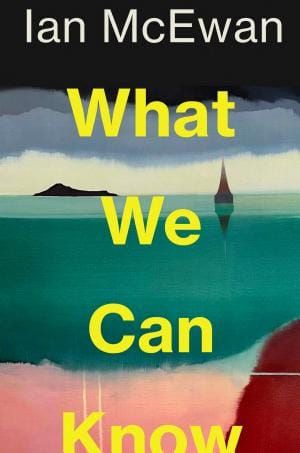
What We Can Know
By Ian McEwan
★★★★★★★★★☆ 9/10
496 pages
What’s it about?
This novel is divided into two parts. In part one, it is 2119, and we meet Thomas Metcalfe, a solitary professor and researcher who has chosen to study a long-lost poem from 100 years earlier. To better understand the poem, he is also interested in the historical period in which it was written. His work concentrates on a dinner party in 2014, where this epic poem was read and then disappeared. He researches everything about Francis Bundy, the poet, and his wife Vivien, for whom the poem was written. Part two finds us back in 2014, getting the true story of the time and characters Thomas Metcalfe has spent so much time researching.
What did it make me think about?
This novel made me think about a wide range of issues, from climate change to how we view history: "Nearly all of life is forgotten."
Should I read it?
I see the brilliance in this novel. I am in awe of how Ian McEwan brought together all these ideas and layered them so delicately into this story. The writing is beautiful and the ideas are complex. As soon as I turned the last page, I wanted to reread Part One to see what I had missed. In full disclosure, though, I did not find the first half that compelling. Because we bring our own lives into what we read, I am sure the fault is more mine than the books'. I write these reviews for my friends, so many of you know that I was at the Memorial Sloan Kettering Cancer Center when I read the first half. My husband and I were figuring out treatment plans for his cancer, and I am sure that made the book easier to put down. Even so, I think the first half would be slow for most of us. But the second half makes it all worthwhile. Pick this one up. Please read it and discuss it. It will be well worth it.
A passage I marked
"Then, of course, hardly worth repeating, they watched amazed as the decades sped by and the Derangement gathered pace, the weapons proliferated and they did little, even as they knew what was coming and what was needed. Such liberty and abandon, such fearful defiance. They were brilliant in their avarice, quarrelsome beyond imagining, ready to die for bad and good ideas alike. As science extended its domain, religious belief and conspiracy theories swelled. They were big and brave, superb scholars and scientists, musicians, actors, and athletes, and they were idiots who were throwing it all away, even as their high culture lamented or roared in pain. We thrill in horror at their feistiness."