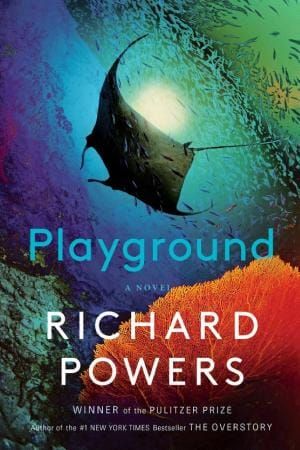
Playground
By Richard Powers
★★★★★★★★★½ 9.5/10
304 pages
What’s it about?
Todd Keane and Rafi Young meet at St. Ignacius High School in Chicago. They are an unlikely pair that bond over games. They become roommates at the University of Illinois where they each pursue their separate passions. Rafi loves literature and poetry while Todd pursues a life in the emerging computer field. Their stories are intertwined with several other storylines to create this novel.
What did it make me think about?
Hope.
Should I read it?
The myriad of ideas in this story! Ideas about human nature, love, friendship, tech, the earth, the ocean, our relationship to the environment, the importance of play, games, God... so many ideas to explore in this novel. Book clubs will have a heyday with this novel. I loved The Overstory so the bar was set high for this book- and I was not disappointed. The fact that Richard Powers situates part of the novel at my alma mater, the University of Illinois, added to my enjoyment. Something about being able to picture the buildings and places he writes about gave this story an extra layer for me. Richard Powers weaves disparate stories together and makes magic again. Many will categorize this book as thought-provoking but I also found it an enjoyable read. This novel will for sure be one of my favorite books of 2024! Oskee-wow-wow Illinois!
A passage I marked
"How so many users found our site so fast still mystifies me. But why they stayed was obvious. We humans are built to compete, built to spout opinions, built to seek prestige and shiny, built to watch our accounts and ratings grow, built to impress our friends and vanquish our enemies. Or maybe we're just built to play.""Years of study had convinced Evelyne that mantas were far smarter than the world suspected. She had spent too many decades of close observation to be cowed any longer by the prohibition against anthropomorphism. What began, centuries ago, as a healthy safeguard against projection had become an insidious contributor to human exceptionalism, the belief that nothing else on Earth was like us in any way. At her age, Evelyne Beaulieu had no more time for demure self-censorship. A good empiricist, she felt no qualms about giving the behavior in front of her a name. The way the Loner toyed with her air bubbles was clear enough. Call it what the evidence suggested. Call it what it looked like: the giant bird-fish was playing."